TIMBER ROTREPAIRS

Affordable timber rot repair Services in Kent
imber rot can affect far more than windows and doors. External joinery and garden structures are continually exposed to rain, condensation and trapped moisture, leaving window frames, door frames, balconies, balustrades, garden gates, fencing, decking, porches, sheds, fascias and other timber features vulnerable to decay. East Kent Repairs provides practical timber rot assessments and repair solutions throughout East Kent.
Wet rot is the most common form of decay found in exposed exterior timber and usually develops where wood remains damp for prolonged periods. It can cause timber to soften, darken, crack or lose strength. Dry rot is a more serious form of fungal decay that can spread beyond the original damp area and may require a wider specialist investigation before repairs are undertaken.
The appropriate solution depends on the type, location and extent of the deterioration. Localised damage may be treated with Repair Care resin or removed and replaced using timber splicing, while severely damaged rails, boards, posts, sashes and other components may need partial or complete replacement. The source of the moisture should also be identified to reduce the risk of the decay returning.
We repair rotten timber in Ramsgate, Broadstairs, Margate, Birchington, Westgate-on-Sea, Canterbury, Sandwich, Deal, Dover, Folkestone, Herne Bay, Whitstable, Ashford, Faversham and surrounding East Kent locations. Send clear photographs of the complete item and close-ups of the affected areas for an initial assessment and quotation.
What CausesTimber Rot and How Can You Spot It?
Wood rot develops when wood remains damp for long periods, allowing fungi to break down its fibres. Common causes include cracked paint, failed putty, open joints, leaking gutters, poor drainage and timber sitting against damp masonry or soil. Exposed timber windows, wooden doors, balconies, garden gates, fencing and decking are particularly vulnerable.
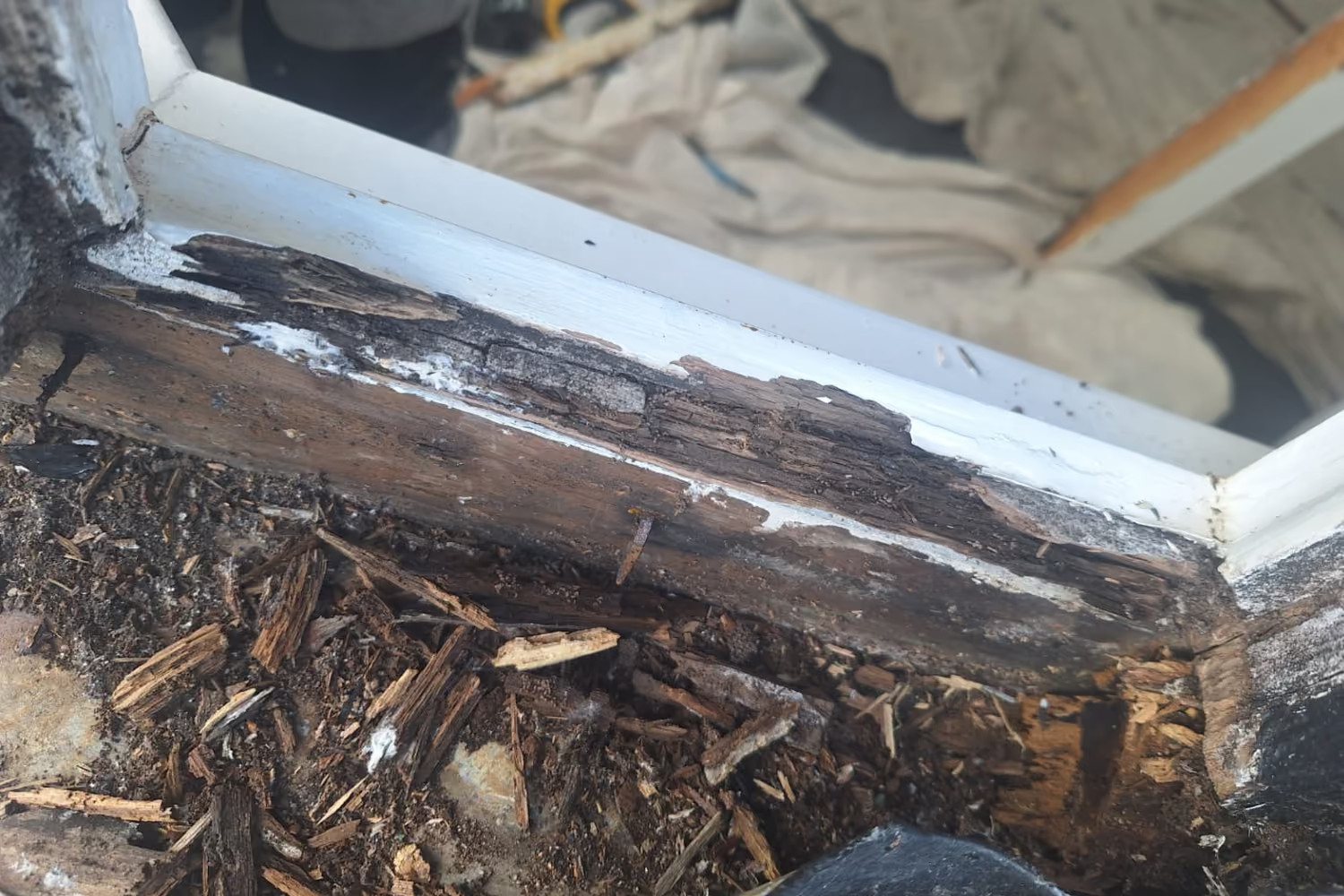
Wet rot is commonly found in timber that remains persistently damp and usually stays close to the source of moisture. Signs can include soft or spongy wood, dark staining, cracking, flaking paint and timber that crumbles when pressed. Dry rot is more serious because fungal growth may spread beyond the original damp area, so suspected dry rot should be investigated carefully.
Rot often begins around window sills, bottom rails, door-frame bases, balcony boards, balustrade posts, decking supports and the lower sections of garden gates and fencing. Other warning signs include musty smells, loose joints, lifting coatings, rusting fixings and timber that no longer feels firm beneath the surface.
Finding the problem early can allow more of the original timber to be retained. Localised decay may be suitable for timber resin repairs or a carefully fitted splice, while badly deteriorated sections of decking or balcony timber may require replacement. We assess timber rot throughout Ramsgate, Broadstairs, Margate, Canterbury, Sandwich, Deal, Dover, Folkestone, Herne Bay, Whitstable and surrounding East Kent locations.
Can RottenTimber Be Repaired or Does It Need Replacing?
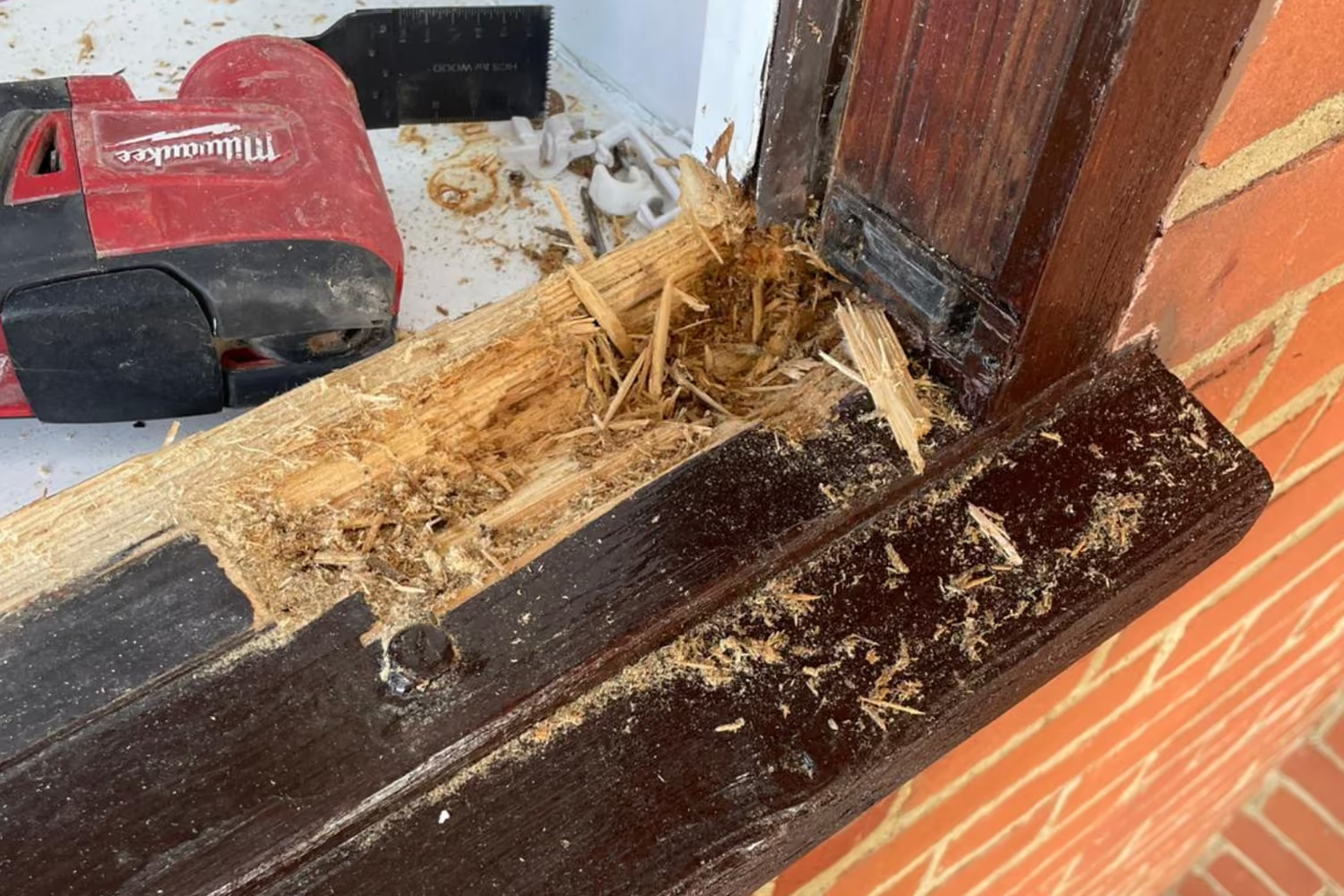
Rotten wood does not always mean that the complete window, door, gate or structure must be replaced. If the decay is confined to one area and the surrounding wood remains sound, the damaged material can often be removed and repaired using a timber splice or specialist resin repair.
The decision depends on the depth and position of the rot, the strength of the remaining timber and the purpose of the affected component. A decayed window-sill corner may be suitable for a local repair, while a badly weakened balcony post, gate stile, decking support or load-bearing section may require more substantial replacement.
Where damage is extensive, replacing an individual rail, board, post, sash or frame section can provide a stronger and more reliable result than repeatedly filling the surface. Our timber window repairs, wooden door repairs and decking and balcony repairs focus on retaining sound material while replacing only what is necessary.
The source of the moisture must also be identified before the repair is completed. Failed coatings, open joints, poor water run-off and contact with damp ground can cause rot to return if they are not addressed. East Kent Repairs assesses rotten wood throughout Thanet, Canterbury, Ashford, Faversham, Sandwich, Deal, Dover, Folkestone, Herne Bay, Whitstable and surrounding East Kent areas.
Timber Splicingand Replacement Window Rails
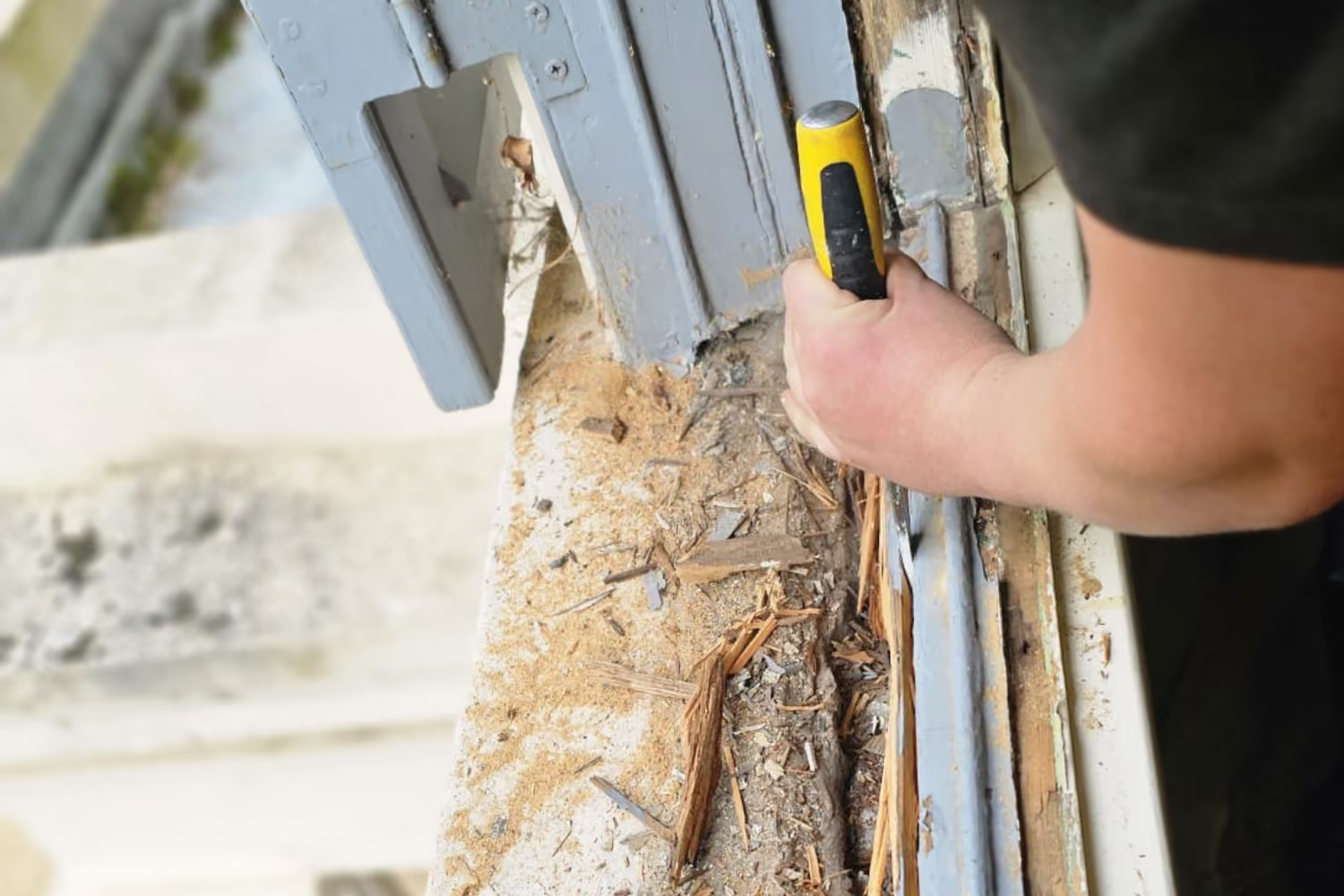
Timber splicing is used when a decayed section is too large for a resin-only repair but the surrounding joinery remains worth retaining. The rotten wood is cut back to a firm, sound section before a new piece of suitable timber is shaped and joined into the original component.
Splice repairs can be used on window sills, frame corners, sash stiles, door-frame bases, gate posts, balcony rails and other exterior joinery. Replacing only the failed section preserves more of the original feature and can avoid the disruption and expense of complete replacement. Examples of this approach can be seen in our recent timber repair projects.
Bottom rails are particularly vulnerable because they receive regular exposure to rainwater and condensation. Rotten sash bottom rails, casement rails and door bottom rails can be removed and replaced when enough sound timber remains to form a dependable joint. Our wider timber window repair service also covers damaged sills, frames and adjoining components.
The replacement timber is formed to follow the dimensions and profile of the existing joinery before being prepared for decoration. Smaller gaps and detailed areas may be completed using Repair Care resin. We carry out timber splicing and replacement rail work across Ramsgate, Broadstairs, Margate, Canterbury, Sandwich, Deal, Dover, Folkestone, Herne Bay, Whitstable and surrounding East Kent locations.
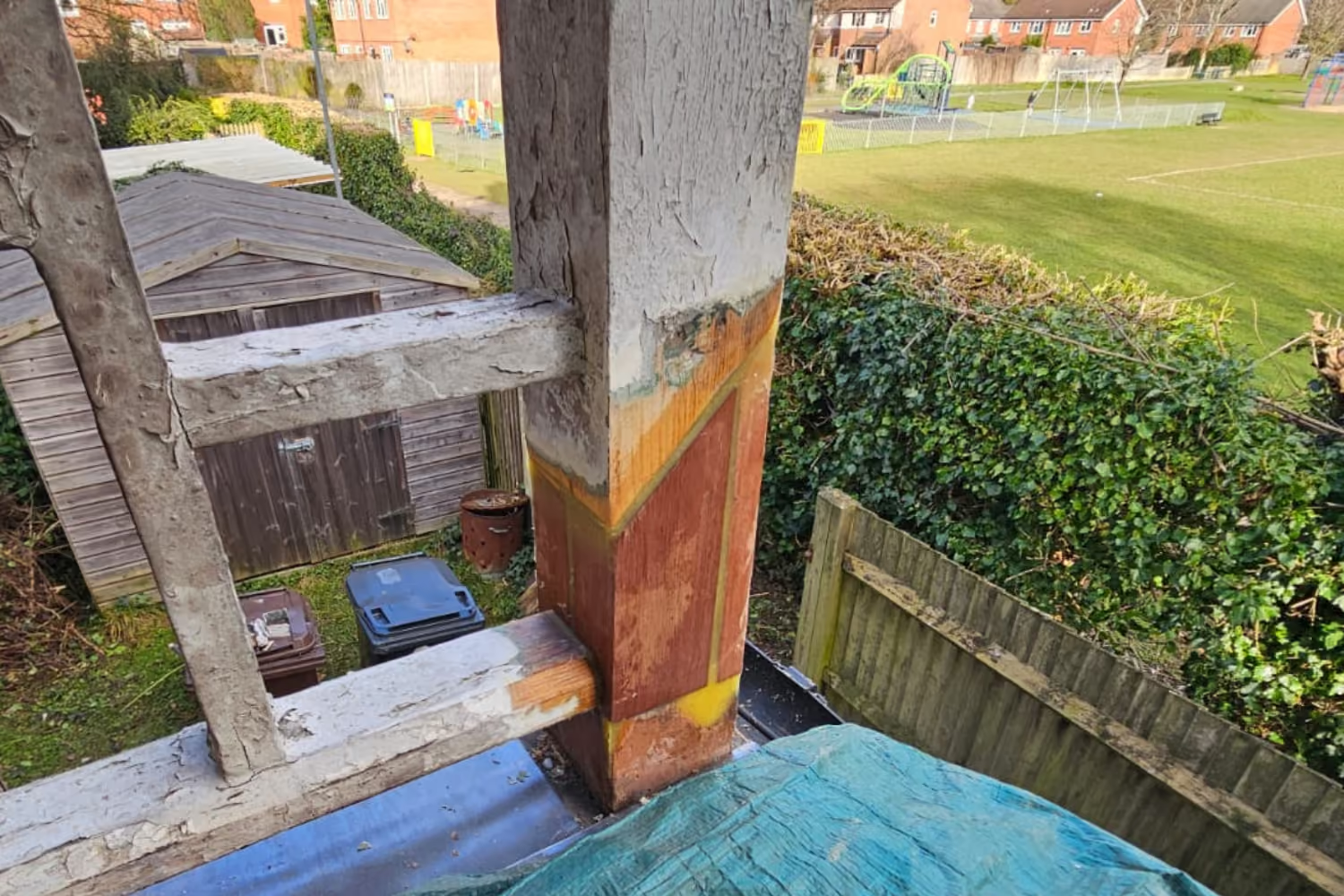
Repair Care resin repairs are particularly useful where timber decay is localised and most of the surrounding wood remains sound. The system allows damaged sections to be rebuilt while retaining more of the original window, door, gate, balcony component or exterior joinery.
The repair begins by removing all soft and decayed timber until a stable section is reached. The remaining wood is prepared and treated before specialist repair resin is applied and shaped to recreate the missing corner, edge, joint, moulding or profile.
Resin repairs can be suitable for window-sill ends, sash corners, glazing bars, door frames, decorative mouldings, gate components and smaller areas of balcony or exterior timber. Larger or structural losses will normally require a timber splice or replacement section rather than resin alone. Our guide to understanding timber rot explains why selecting the correct repair method is important.
Once cured, the resin is shaped, sanded and prepared for decoration so the repaired area blends with the surrounding timber. East Kent Repairs provides specialist resin repairs throughout East Kent. Examples can also be viewed among our recent repair projects.
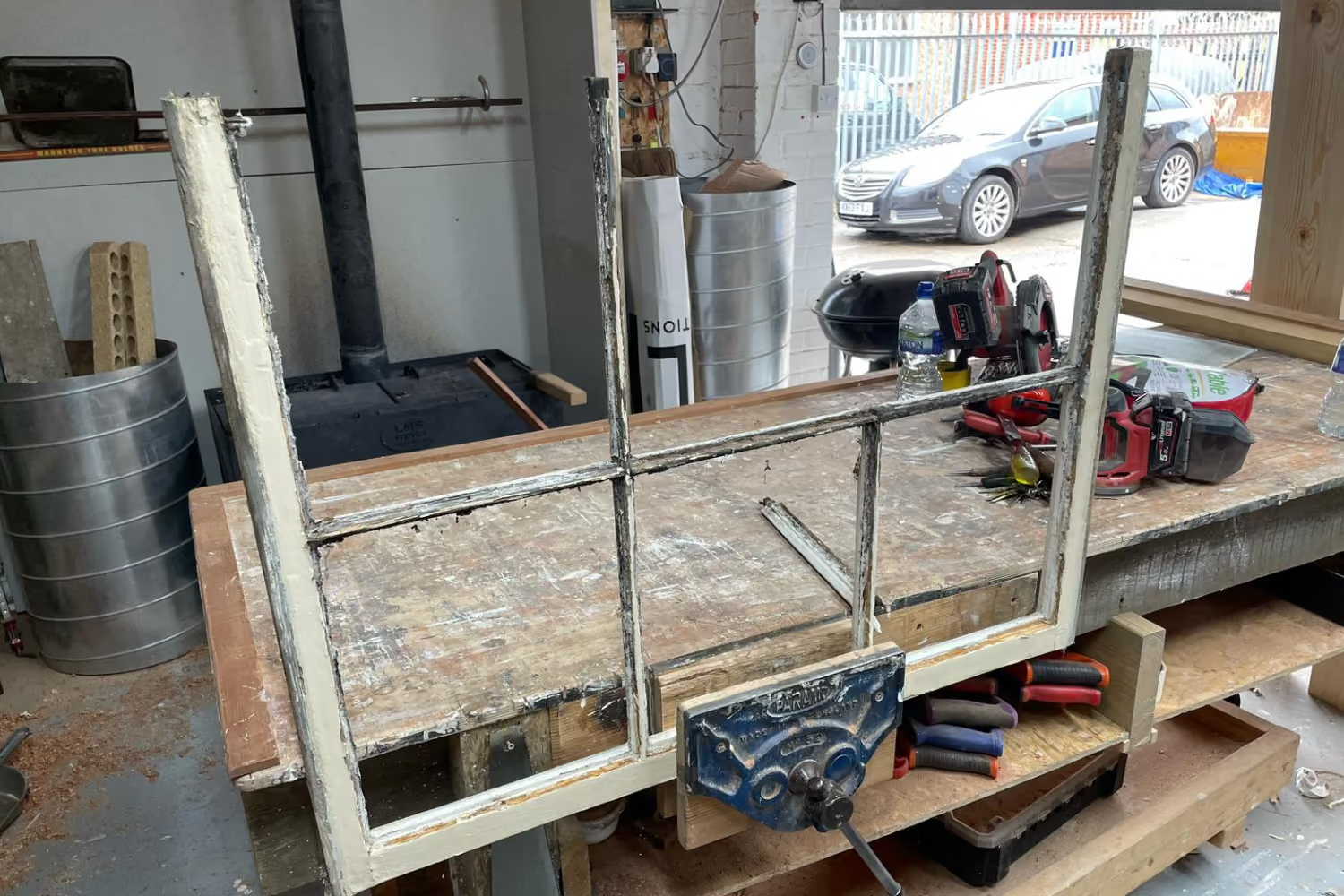
The bottom sash is one of the most exposed parts of a traditional window and is particularly vulnerable to rainwater, failed putty and deteriorated paintwork. Where rot has spread through the bottom rail, stiles or joints, manufacturing a new bottom sash may provide a more dependable solution than carrying out several separate repairs.
A replacement sash can be made to follow the dimensions, glazing layout, mouldings and general appearance of the original window. Existing glass and fittings may be retained where suitable, or new glazing, cords and hardware can be incorporated as part of the wider sash window repair.
Sash reinstatement may also be appropriate where an original sash has been removed, altered or damaged beyond practical repair. A new timber sash can be produced to restore the window’s traditional sliding operation while remaining compatible with the existing box frame, weights, pulleys and surrounding joinery.
Before recommending replacement, the box frame, sill and remaining sash are inspected to confirm that they are sound enough to retain. East Kent Repairs provides replacement sashes and sash reinstatement services across Ramsgate, Broadstairs, Margate, Canterbury, Faversham, Sandwich, Deal, Dover, Folkestone, Herne Bay, Whitstable and surrounding East Kent areas. Indicative costs for replacement sashes and timber repairs are also available online.
New Timber Windowsand Frames Across East Kent
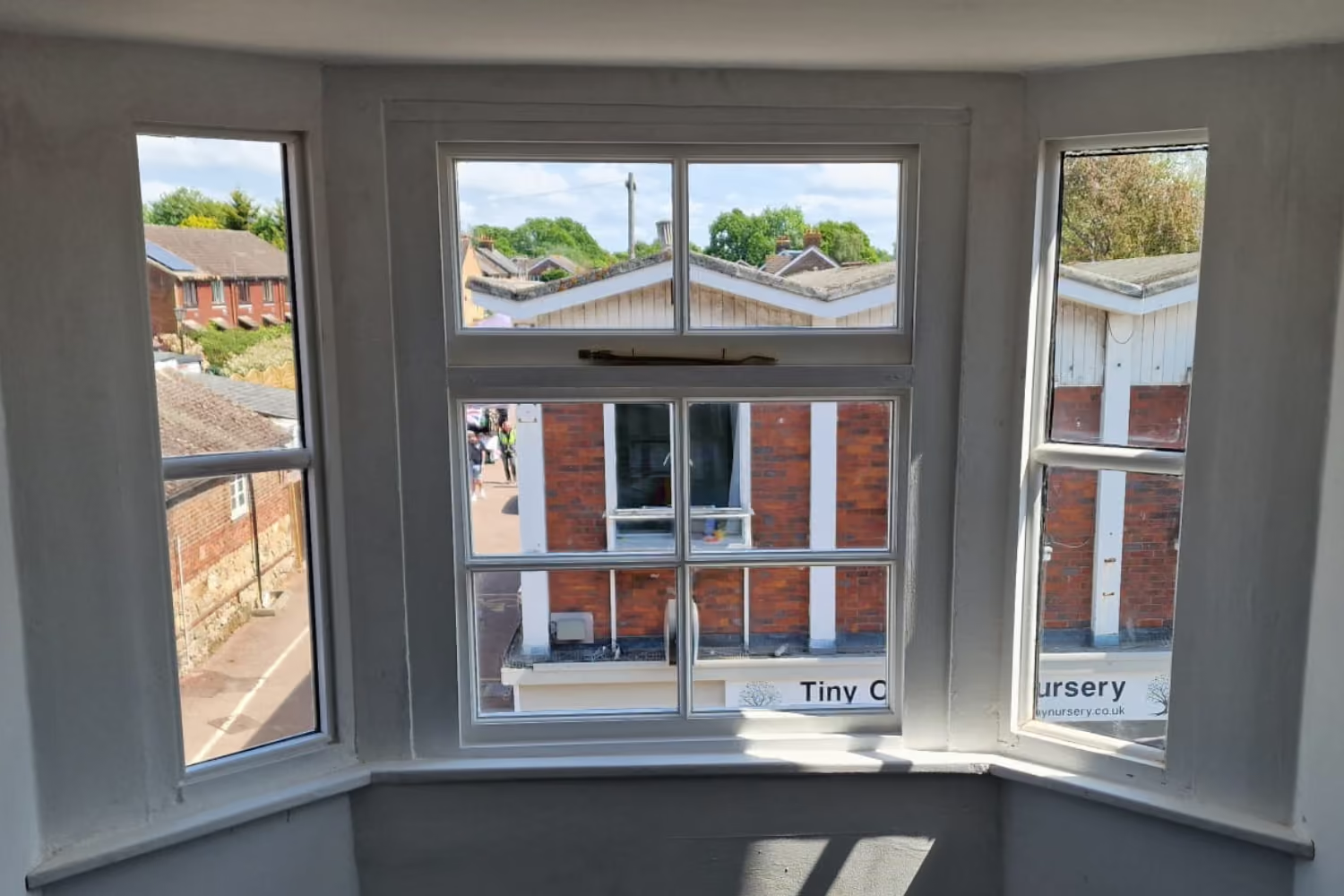
Complete replacement may be the most practical option when rot has spread through several structural components or when the sash, frame and sill have all deteriorated beyond dependable repair. We consider localised timber window repairs first, recommending a new window or frame only where retaining the existing joinery is no longer sensible.
New timber sashes, casement windows, box frames and complete window units can be made to suit the existing opening. The dimensions, glazing layout, mouldings and proportions can be selected to complement the property, which is particularly important for traditional homes and older buildings.
Replacement work can include removing the deteriorated joinery, preparing the opening, installing the new timber components and completing the agreed glazing and finishing work. Related repairs to sills, surrounding timber and adjoining areas can also be considered as part of the project. Indicative costs for replacement sashes and timber window services are available online.
East Kent Repairs provides new timber windows and replacement frames across Ramsgate, Broadstairs, Margate, Canterbury, Ashford, Faversham, Sandwich, Deal, Dover, Folkestone, Herne Bay, Whitstable and surrounding East Kent locations. Send photographs and approximate measurements through our contact page to request an initial assessment and quotation.
East Kent Repairs provides practical repairs for rotten windows, doors, balconies, balustrades, decking, garden gates, fencing and other exterior timber throughout East Kent. Depending on the extent of the decay, solutions may include Repair Care resin repairs, timber splicing, replacement rails, new sashes or complete replacement components.
For an initial assessment, please send photographs showing the complete item, close-ups of the rotten areas and any nearby joints, masonry or surfaces that may be contributing to trapped moisture. Include approximate dimensions, your postcode and details of when the problem was first noticed through our contact page.
From a single rotten sill or gate post to several affected windows, balcony boards or sections of timber decking, we provide a straightforward repair-first service across Ramsgate, Broadstairs, Margate, Birchington, Westgate-on-Sea, Canterbury, Ashford, Faversham, Sandwich, Deal, Dover, Folkestone, Herne Bay, Whitstable and surrounding East Kent locations.
TIMBE ROT FAQ
What causes timber to rot?
Timber rot develops when wood remains damp for long periods. Common causes include failed paintwork, cracked putty, open joints, leaking gutters, poor drainage, condensation and timber being in contact with damp soil or masonry.
What is the difference between wet rot and dry rot?
Wet rot normally remains close to a persistent source of moisture and commonly affects exposed exterior timber. Dry rot can spread beyond the original damp area and may require a wider specialist investigation before repair work begins.
How can I tell if timber is rotten?
Common signs include soft or spongy wood, dark staining, cracking, crumbling fibres, flaking paint, loose joints and a musty smell. Our guide to understanding timber rot explains the warning signs in more detail.
Can rotten timber be repaired without complete replacement?
Yes, provided the decay is localised and enough sound timber remains. The damaged material may be removed and rebuilt using resin, a timber splice or a replacement component while retaining the unaffected sections.
What is a timber splice repair?
A timber splice involves cutting away the rotten section and joining a new piece of suitable timber to the sound original wood. It is commonly used for window sills, rails, frame corners, door-frame bases, gate posts and other structural sections.
What is a Repair Care resin repair?
A Repair Care resin repair uses a specialist repair system to rebuild localised areas of missing or decayed timber. Once cured, the repair can be shaped, sanded and prepared for decoration.
When is resin unsuitable for rotten timber?
Resin is unsuitable where decay is extensive, the remaining timber is weak or the affected component requires substantial structural strength. A timber splice or replacement section will normally provide a more dependable repair in these situations.
Can rotten timber window rails be replaced?
Yes. Rotten bottom rails, sash rails and casement rails can often be replaced while retaining the remaining sound parts of the window. Our timber window repair service covers rails, sills, sashes and frames.
Can you replace a rotten bottom sash?
A new bottom sash can be manufactured where the existing sash is too deteriorated for a reliable repair. It can be made to follow the dimensions, glazing arrangement and general appearance of the original window.
Can rotten wooden doors and frames be repaired?
Localised rot around door bottoms, stiles, thresholds and lower frame sections can often be repaired with resin or new timber. More extensive wooden door repairs may involve replacement rails, frame sections or complete components.
Do you repair rotten garden gates and fencing?
Yes. Suitable gate rails, stiles, posts and fence components can be repaired or replaced depending on their condition. Further information is available on our gate and fencing repairs page.
Can rotten balcony and decking timber be repaired?
Damaged boards, handrails, posts and supporting sections may be repairable, but safety-critical or load-bearing components require careful assessment. We provide decking and timber balcony repairs across East Kent.
Will timber rot return after a repair?
Rot can return if the original moisture source is not addressed. Failed coatings, leaking joints, poor water run-off and contact with damp surfaces should be corrected, and repaired timber must remain properly decorated and maintained.
Which areas do you cover?
We provide secondary glazing services throughout Kent, including Canterbury, Maidstone, Ashford, Tonbridge, Tunbridge Wells, Medway, Dartford, Gravesend, Sevenoaks, Ramsgate, Broadstairs, Margate, Deal, Dover, Folkestone and surrounding areas.
What payment options do you accept?
Unlike many carpentry repair companies, we accept debit cards, credit cards and Klarna, giving you more flexibility and peace of mind when arranging your repairs. Pay by card or explore spreading the cost with Klarna, subject to eligibility and terms.