.avif)
WOODEN GATE AND FENCINGREPAIRS ACROSS EAST KENT
Affordable Gate and Fecning Repairs
Wooden gates and fencing can quickly become loose, damaged or difficult to use when timber starts to rot, posts begin to lean, panels break or ironmongery wears out. East Kent Repairs provides affordable gate and fencing repairs throughout East Kent, helping homeowners restore the security, appearance and lifespan of their existing garden boundaries without automatically needing to replace everything.
From minor adjustments and replacement hinges through to new gate frames, repaired fence posts, replacement panels and timber rot repairs, we carry out practical work that keeps gardens safe, secure and usable. We repair sagging wooden gates, damaged gate rails, rotten posts, loose fence panels, broken latches, worn hinges, timber fencing affected by damp and general storm damage.
Where possible, we repair and retain existing gates and fencing rather than recommending unnecessary replacement work. Many gate and fencing repairs can be quoted from photographs and completed quickly by skilled local carpenters across Ramsgate, Broadstairs, Margate, Canterbury, Whitstable, Herne Bay, Sandwich, Dover, Folkestone and the surrounding East Kent areas.
Gate and Fencing Repairs AcrossEast Kent
A damaged gate or failing fence can soon make a garden feel exposed, untidy or less secure. A gate may start dragging on the ground, a panel can blow out in strong winds or a timber post can decay below ground level and leave the whole section leaning. East Kent Repairs provides affordable gate and fencing repairs across Ramsgate, Broadstairs, Margate, Canterbury, Whitstable, Herne Bay, Sandwich, Dover, Folkestone and nearby areas.
We work on side gates, garden gates, boundary fencing, lap panels, close board fencing, timber posts, concrete posts, gravel boards and smaller garden timberwork. Some jobs are straightforward adjustments, while others need a replacement panel, a new post or a made-to-measure gate fitted into the existing opening.
Where possible, we repair the part that has failed rather than replacing an entire run of fencing unnecessarily. This keeps costs more reasonable and can help retain the existing look of the garden. Fences, gates and garden walls still need to be structurally sound and properly maintained, even where building regulations do not apply Planning Portal guidance on fences, gates and garden walls explains this in more detail.
.png)
Repairing Storm-DamagedFencing
High winds can expose weaknesses that have been building up over time. Rotten posts, loose panels, split rails and failing fixings may hold together in normal conditions, then give way during a storm. Once one section falls or leans, the pressure can transfer into the neighbouring panels and create a larger repair job.
We repair fence panels that have fallen out, broken rails, leaning posts, loose gravel boards and damaged sections caused by wind, impact or fallen branches. The work may involve refitting panels, strengthening the existing structure or replacing only the damaged components where the rest of the fence is still in reasonable condition.
It is usually best not to attempt repairs while severe weather is still ongoing. Government storm guidance advises avoiding fences, boundary walls and trees during high winds, and not going outside to carry out property repairs during the storm itself. Read the GOV.UK storm safety guidance before dealing with storm damage.
Wooden Gate Repairs andReplacement
A wooden gate sees regular use and often takes more wear than the rest of the fence. Hinges can loosen, timber can swell in wet weather, rails can crack and the gate may eventually drop low enough to scrape the ground. A latch that no longer lines up can also leave the garden less secure than it should be.
We carry out practical wooden gate repairs including rehanging dropped gates, replacing hinges, fitting latches and bolts, adjusting swollen or sticking gates, repairing damaged timber rails and strengthening loose frames. We can also deal with the supporting gate posts where they have moved, decayed or started to lean.
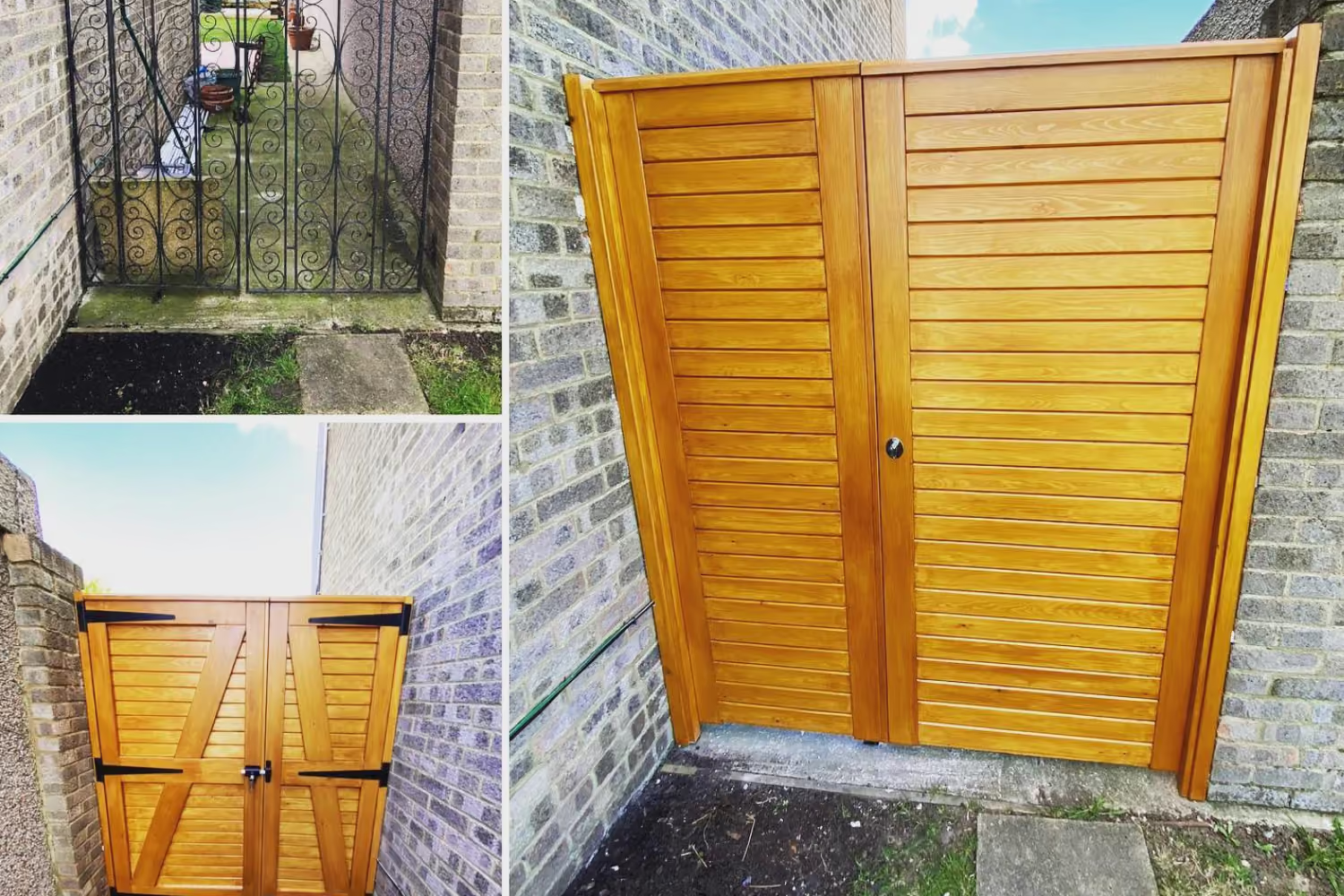
Where a gate is too far gone to repair sensibly, we can fit a replacement timber gate made to suit the opening. This can include simple side gates, garden access gates and made-to-measure gates designed to sit neatly alongside the existing fencing, rather than looking like an obvious add-on.
.avif)
.avif)
Fence posts are what keep the whole boundary upright. When a post begins to fail, the panels on either side can become unstable even if the timber itself still looks fairly sound. Timber posts often deteriorate where they meet damp ground, while older concrete posts can crack, loosen or shift over time.
We replace failed fence posts using timber or concrete options, depending on the existing fence and the most practical solution for the job. In many cases, sound neighbouring panels can be retained while only the damaged post is renewed. This avoids replacing materials that still have plenty of life left in them.
Gravel boards can also make a noticeable difference to how long new panels last. They help keep timber clear of wet soil and reduce direct contact with standing water. Where the lower edge of a panel has started to rot, replacing or adding a gravel board can help protect the new fencing from the same problem returning too quickly.
A damaged fence does not always need a full replacement. A single panel may have split, blown out or broken after impact, while the posts and adjoining sections remain stable. In these situations, a localised repair is often the most sensible way to restore privacy and security without spending more than necessary.
We fit replacement fence panels, individual timber boards, rails, closeboard sections and smaller framing repairs. This can include standard lap panels, horizontal slatted sections, vertical-board fencing and repairs to older garden boundaries where only part of the run has failed.
Matching new timber to an older fence can be difficult at first because the existing material may have weathered for years. We aim to use materials that work neatly with the surrounding boundary, allowing the repaired section to blend in more naturally as it settles and ages. When new treated timber is used, it should always be suitable for the intended application and used in line with the manufacturer’s instructions. HSE guidance on wood preservative products gives useful background on products intended to protect timber.
.avif)
.png)
GARDEN FENCING REPAIRS THATKEEP EXISTING FEATURES
Many gardens have established planting, narrow beds, sheds, patios or neighbouring boundaries close to the fencing. Replacing a section of fence needs more care than simply pulling panels out and putting new ones back in. We try to protect the surrounding garden, work around established features and keep disruption to a minimum.
This is particularly useful where climbing plants or shrubs have grown around the fence line. In some cases, it is possible to keep planting in place while replacing a panel or post. In others, some trimming back may be needed to allow access and make sure the repaired fence is secure rather than being forced out of line by roots or heavy growth.
For taller replacement fences or gates, it is worth checking the planning position before work begins. In many situations, fences and gates can be installed without planning permission, but there are height limits, especially beside a highway or footpath. Planning Portal’s fence and gate guidance sets out the usual one-metre and two-metre limits.
East Kent Repairs provides local, practical help for damaged gates, broken fencing, leaning posts and tired garden boundaries. We focus on repair work that improves security, privacy and appearance without automatically turning a smaller issue into a full replacement project.
For many jobs, clear photographs are enough to give an initial idea of the likely repair. It helps to send one image of the full fence or gate, a closer image of the damaged area and photos showing the posts, hinges or base where the issue has started. This allows us to see whether the problem is likely to be a panel, post, fixing or structural issue.
Whether you need a dropped gate rehung, a storm-damaged panel replaced or a leaning fence strengthened, we aim to provide a sensible option that suits the condition of the existing boundary and your budget.
FAQ
Can you repair the sashes in a window instead of replacing them?
Yes. In many cases, sashes can be repaired without replacing the whole window. We look at the condition of the sashes, box frame, sill and surrounding timber before recommending the most sensible option. Small areas of decay, broken cords, loose glazing bars, worn beads and damaged rails can often be repaired or replaced individually.
Where the existing window is still largely sound, repairing it is usually more affordable than fitting a complete replacement. It also helps retain the original proportions and character of traditional timber windows.
Do you replace rotten bottom rails on sash windows?
Yes. Bottom rails are one of the most common sash window repairs because they are exposed to rainwater, failed paintwork and damaged putty. Once moisture gets into the timber, rot can spread along the rail and into the lower stiles.
We can remove the damaged section and fit a new bottom rail to match the original sash as closely as possible. Where needed, we can also repair or replace lower stile sections at the same time.
Can you replace meeting rails and other sash window rails?
Yes. We can replace bottom rails, meeting rails, top rails and localised stile sections where they have become rotten, split or structurally weak. The new timber is made to suit the size and profile of the existing sash so that the repair blends in once the window has been prepared and painted.
Where only one section is affected, we aim to retain as much sound original timber as possible. If the sash is too far gone for a sectional repair, a complete replacement sash may be the better option.
Can you repair broken sash cords and windows that will not stay open?
Yes. Broken or worn sash cords are a common cause of sash windows dropping, becoming difficult to open or failing to stay in position. We can fit new cords, check the pulleys and make sure the weights are operating correctly within the box frame.
If the sash is sticking as well as having broken cords, we can also look at paint build-up, swollen timber, worn beads or other issues affecting how smoothly the window moves.
Can you repair rotten window frames and box frames?
Yes. Rotten window frames can often be repaired with carefully fitted timber splices or resin repairs, depending on the size and position of the damaged area. Common problem areas include lower frame corners, outer linings, jambs and the timber beneath the sash.
We remove decayed timber back to a sound section before carrying out the repair. This helps create a strong and practical result while avoiding unnecessary full frame replacement where possible.
Do you repair or replace timber window sills?
Yes. Timber window sills are regularly affected by rot because they take the full impact of rainwater. We repair damaged sill ends, worn front edges and localised decayed sections beneath sash and casement windows.
Where a sill is too deteriorated for a dependable repair, we can fit a replacement timber sill with the correct fall and drip detail. This helps direct rainwater away from the building and protects the frame below.
Can you reglaze old sash and casement windows?
Yes. We can reglaze loose, cracked or broken panes in traditional timber windows. This can include replacing damaged glass, renewing failed putty and repairing or replacing damaged timber glazing bars where needed.
Reglazing is often completed alongside other repairs such as sash rail replacement, sill repairs or general window maintenance, helping to leave the window more secure and weather-resistant.
Will the repaired windows be ready to paint?
We undercoat new timber and any exposed timber created during the repair, so no bare wood is left exposed when the work is complete. This helps protect the repaired sections while the windows are waiting to be decorated.
The windows will still need full preparation and decoration afterwards, particularly where existing paintwork remains on the surrounding areas. A decorator should allow for sanding, filling, preparation and painting across the full window for a consistent final finish.
Can you quote sash window repairs from photographs?
Many smaller sash window, casement, frame and sill repairs can be assessed from photographs. Clear pictures of the affected area, a wider photo of the full window and a short description of the issue usually give us enough information to provide an initial estimate.
For larger repairs, replacement sashes or more extensive decay, we may need to arrange a visit to inspect the window properly and confirm the most suitable repair.
Do you work on listed buildings and period properties?
Yes. We regularly carry out glazing repairs to listed buildings and period homes, using traditional materials and techniques wherever appropriate to preserve the property's original character.
Which areas do you cover for sash repairs?
We carry out sash repairs across Ramsgate, Broadstairs, Margate, Canterbury, Whitstable, Herne Bay, Sandwich, Dover, Folkestone and surrounding areas throughout East Kent.Whether you need a broken sash cord replaced, a rotten bottom rail repaired, a new sill fitted or a casement window restored, we provide practical local repairs for traditional timber windows.